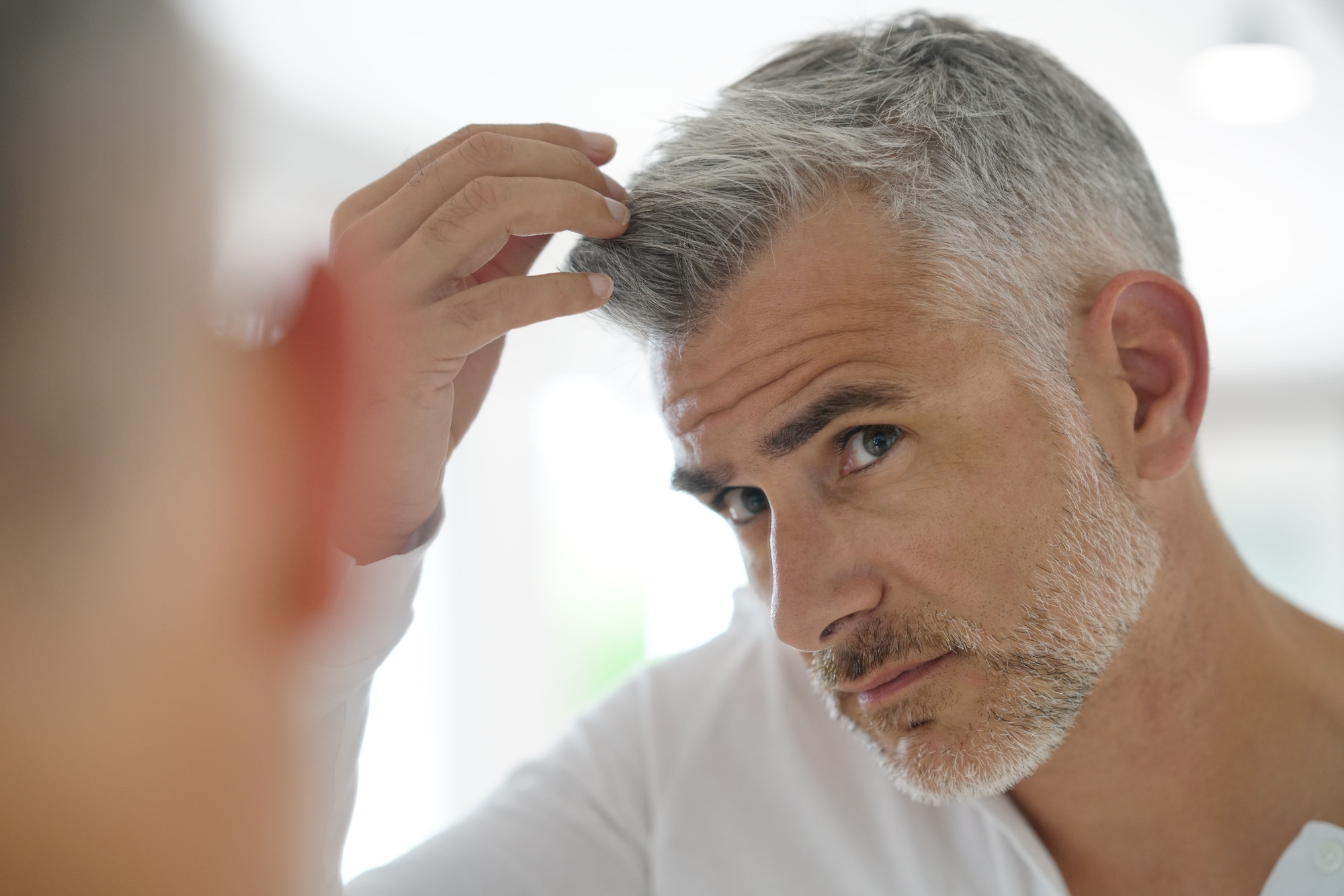
Many of us have a love-hate relationship with our hair. It may be too curly or too straight. Perhaps it tends to frizz, or a cowlick keeps you from the hairstyle you want. And, sometimes, we are unhappy with the way our hair changes with age.
The texture, quantity, and color of your strands are all subject to change during your lifetime. Various internal and external forces may play a role in this transformation, but one of the most significant is often hormones. With the potential to produce both temporary and permanent effects, hormones are responsible for many of the ways hair changes with age.
Everyone Experiences Hair Changes With Age
The hair on your head will undergo multiple changes over time. Though you might not know precisely what to expect, you may be able to get some clues by observing older members of your family.
Hair Loss
Hair loss is a common experience as you age. Throughout your life, you lose on average 50-100 hairs per day. Unfortunately, in the course of normal aging, some hair follicles stop producing hair. As a result, all of the hairs that fall out will not be replaced. This eventually leads to some thinning for most people.
Pattern baldness is the most common type of hair loss for both men and women. This results from the interaction of androgenic hormones in people who have a genetic predisposition to baldness. Hair follicles shrink causing shorter, finer hairs. Eventually, the follicles may stop producing hair though they remain viable.
The pattern for men is typically receding hair at the hairline and thinning on the crown. Though the process of hair loss is similar, women may first notice a widening part due to thinning at the crown. Although age typically plays a role, hair loss may begin after puberty for some.
Color Change
One of the most recognizable signs of aging is graying hair. As you grow older, the hair follicles produce less melanin pigment and new hairs grow in gray. Hairs fall out and a new, less pigmented hair grows in its place. Around the same time, less oil is produced, so hair is drier and appears more wiry. In turn, your hair may require more hydration for styling.
While stress may cause hair loss and hasten graying, when you turn gray is mostly determined genetically. For most, greying begins in your 30s, but this can vary.
Breakage and Texture Changes
Hair that is easily damaged occurs for several reasons. Thyroid disease may cause hair to weaken, fall out, or break off easily. Similarly, nutritional deficiencies may affect the hair follicles, resulting in temporary hair loss or a change in hair quality. Some deficiencies may cause dry, dull hair and loss of pigment, and some, such as iron deficiency, lead to chronic hair loss.
The surge of hormones in pregnancy along with prenatal vitamins may produce thick, shiny hair. After delivery, a woman may experience some shedding as hormones return to pre-pregnancy levels. This type of thinning is temporary and hair growth should return by one year postpartum.
The way you style your hair also affects its condition. Using chemicals to straighten or color hair, can cause damage, including breakage and textural changes. Hairstyles that pull tightly on the hair may result in a type of permanent hair loss called traction alopecia.
Supports for Changing Hair
Today, there are many supports available for hair as it changes with age. From hair products to nutritional supplements to prescription medications and surgical procedures, you have options to help you look and feel your best.
| HRT | When hair loss is connected to the hormonal changes that naturally occur with age, restoring hormone levels with hormone replacement therapy (HRT) may allow you to prevent further loss and improve hair quality. This is particularly true for women, as menopause can trigger a number of unwanted hair changes. |
| Nutrition | Our hair is sensitive to nutritional deficiencies, and there are many important nutrients that support healthy hair growth. A diet containing biotin, folic acid, B vitamins, iron, calcium, and vitamin D may all contribute to healthier, fuller hair. Adequate levels of protein and omega-3 fatty acids are also needed. If you think you may be suffering a nutritional deficiency, it is critical to get an accurate diagnosis through laboratory testing. This will allow your practitioner to recommend dietary supplementation of specific nutrients to target your deficiency. |
| Styling | Whether hair loss is temporary or permanent, certain hairstyles can make your hair look fuller. An experienced hairstylist can recommend a style or color change to help camouflage thinning hair. You should avoid styles that put a strain on hairs, potentially compounding hair loss or breakage. |
| Hair Products | There are many products available to support a variety of hair changes. Volumizing or thickening shampoos coat hair strands to make them appear thicker. Lighter conditioners are also beneficial, as they will not weigh hair down. |
| Medications | There are several medications available to address hair loss: Minoxidil is available over-the-counter in liquid, foam, or shampoo for both men and women. Daily use can cause hair follicles to begin regrow hair within about four months. Finasteride is an oral prescription medication for men. It has been used to successfully regrow hair in about three months’ time. However, it may have uncomfortable side effects, including chills, dizziness and confusion, loss of sexual desire, and erectile dysfunction. The use of topical finasteride, which absorbs through the skin, has the potential to impact hair regrowth without these systemic side effects. The benefits of minoxidil and finasteride last only as long as therapy continues. Hair loss returns when treatment is discontinued. |
| Laser Therapy and Surgical Treatments | Low-level laser therapy may improve hair density in men and women. Injections with a person’s own platelet-rich plasma obtained through a blood draw are also showing promise for men and women. Surgical implantation of hair removed from another area of the head is a more invasive treatment that has proven successful in restoring fuller hair in men and women. |
Finding Solutions to Hair Changes With Age
Though the effects are physical, visible changes to your hair often have profound psychological effects, potentially damaging your self-image and confidence. Reaching out for help can ensure that you have appropriate supports and open up a path to improvement.
Since many treatments prevent further changes but don’t regrow lost hair, it is important to seek help sooner rather than later. Practitioners who specialize in integrative medicine have expertise in dealing with the changes that occur as you age. Significantly, they have special training in hormone health and the body systems affected by your hormones, giving them potentially powerful tools to address hair changes with age.
Treating hair loss or damage appropriately depends on an accurate diagnosis. Once the cause has been identified, therapies and lifestyle changes can be reliably prescribed. The best treatment option may be a combination of pharmacological and other therapeutic modalities.
Through the benefits of telemedicine consultations, you can begin to understand the causes of hair changes as you age. With the availability of in-home lab testing and the convenience of home delivery, you can get started on a plan to repair or regrow your hair sooner. With the support of an experienced and compassionate practitioner, you can work on setting yourself up for success.
If you are concerned about hair changes with age, BodyLogicMD wants to help. The practitioners in the BodyLogicMD network can help you discover the cause of these changes and create a personalized plan to address them. Set up a virtual consultation today, and take the Hormone Balance Quiz to learn more about the programs offered by BodyLogicMD.
Disclaimer: These statements have not been evaluated by the Food and Drug Administration. All content on this website is for informational purposes only. The content is not intended to diagnose, treat, cure or prevent diseases.